From Doing the Work to Owning the Outcome: A New Manager’s Guide to Accountability

There is a strange moment that hits almost every newly promoted manager. You were good at the work. So good, in fact, that they handed you a team. Now your calendar is full of things you cannot finish alone, and your results depend on people who do not track their progress the way you would. That gap, between the work you can control and the outcomes you are now answerable for, is where most new leaders quietly struggle.
Here is the part nobody mentions on promotion day. The old strategy of out-working everyone stops paying off the minute you start leading people. What carries you now is something quieter and harder. You have to build real accountability on a team, and you have to make decisions that people will actually follow.
This is not about authority. It is about architecture. Let me break it into small bites you can use this week.
Accountability Is an Invitation, Not a Hammer
Plenty of new managers reach for accountability only after something breaks. A deadline slips, a project stalls, and the word becomes a hunt for someone to blame. That reflex is understandable, and it is also the fastest way to lose the room.
Real accountability calls people forward. It does not call them out.
When you lead this way, accountability stops being a punishment and turns into a standard people want to rise toward. They keep their promises because they trust that owning a result will be met with support rather than a setup. That trust sits at the heart of the Support pillar in our RISE Framework, the place where accountability and community grow together instead of fighting each other.
Know the Difference Between Responsibility and Accountability
A lot of early confusion comes from blurring two words that sound almost identical.
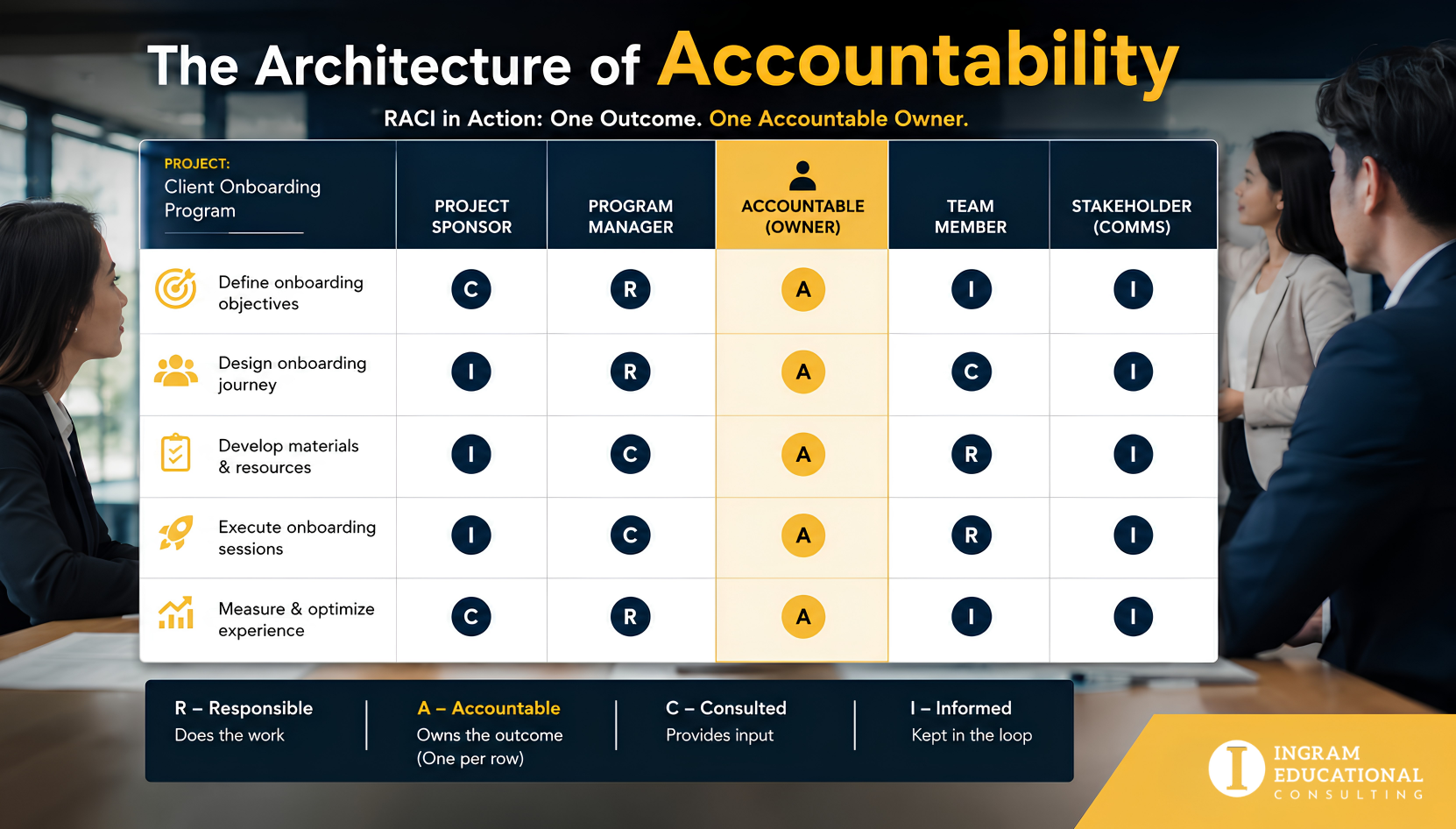
Responsibility is the what. It is the task, the assignment, the slice of the project sitting on someone’s plate, and it can be shared across several people without a problem.
Accountability is the so what. It is ownership of the outcome, not just the activity. For any single result, you want one accountable person. Not a committee. One name attached to the finish line.
A simple tool keeps this clean. It is called RACI, and it sorts every task into four roles: who is Responsible for doing the work, who is Accountable for the result, who needs to be Consulted along the way, and who only needs to be kept Informed. Spend twenty minutes mapping a messy project this way and watch the fog lift. Most of the arguments that used to eat your meetings were never about the work. They were about unclear ownership.
Move From Making Decisions to Making Commitments
Here is a shift that separates managers who get followed from managers who get politely ignored.
A decision lives in your head. You weigh the options, you pick a path, and you move on. A commitment lives in your character. It is the promise to follow through even when the day turns hard and the path turns inconvenient.
Teams can sense the difference. When a leader keeps commitments out loud and in public, something powerful takes root. People start to feel safe enough to speak up, to push back, and to fail without bracing for punishment. Researchers call this psychological safety, and a wide body of work, including Google’s well-known Project Aristotle study and Amy Edmondson’s research at Harvard, ties it directly to teams that outperform.
Notice what happened there. Your steadiness became their courage. That is leadership doing its quiet work.
Stop Trying to Be the Smartest Person in the Room
New managers often believe the job is to always have the answer. That belief is exhausting, and it is also wrong.
The leaders who build the strongest teams ask far more than they tell. They trade a little authority for curiosity. When a problem lands on the table, they resist the three-second fix and reach for a better question instead: “What more can we find here?” That is facilitative leadership, and it runs on a handful of habits worth practicing:
• Ask instead of tell. Open-ended questions pull more out of a team than a fast directive ever will.
• Sit with ambiguity. Let a solution take shape rather than grabbing the first quick fix that appears.
• Treat thinking together as real work. Collaborative discussion is productive, not a detour from the productive stuff.
• Hold your judgment. A simple “thank you” invites more sharing than an instant “great idea.”
•Set the ground rules early. Clear expectations give quieter voices the same room as the louder ones.
Match the Decision to the Moment
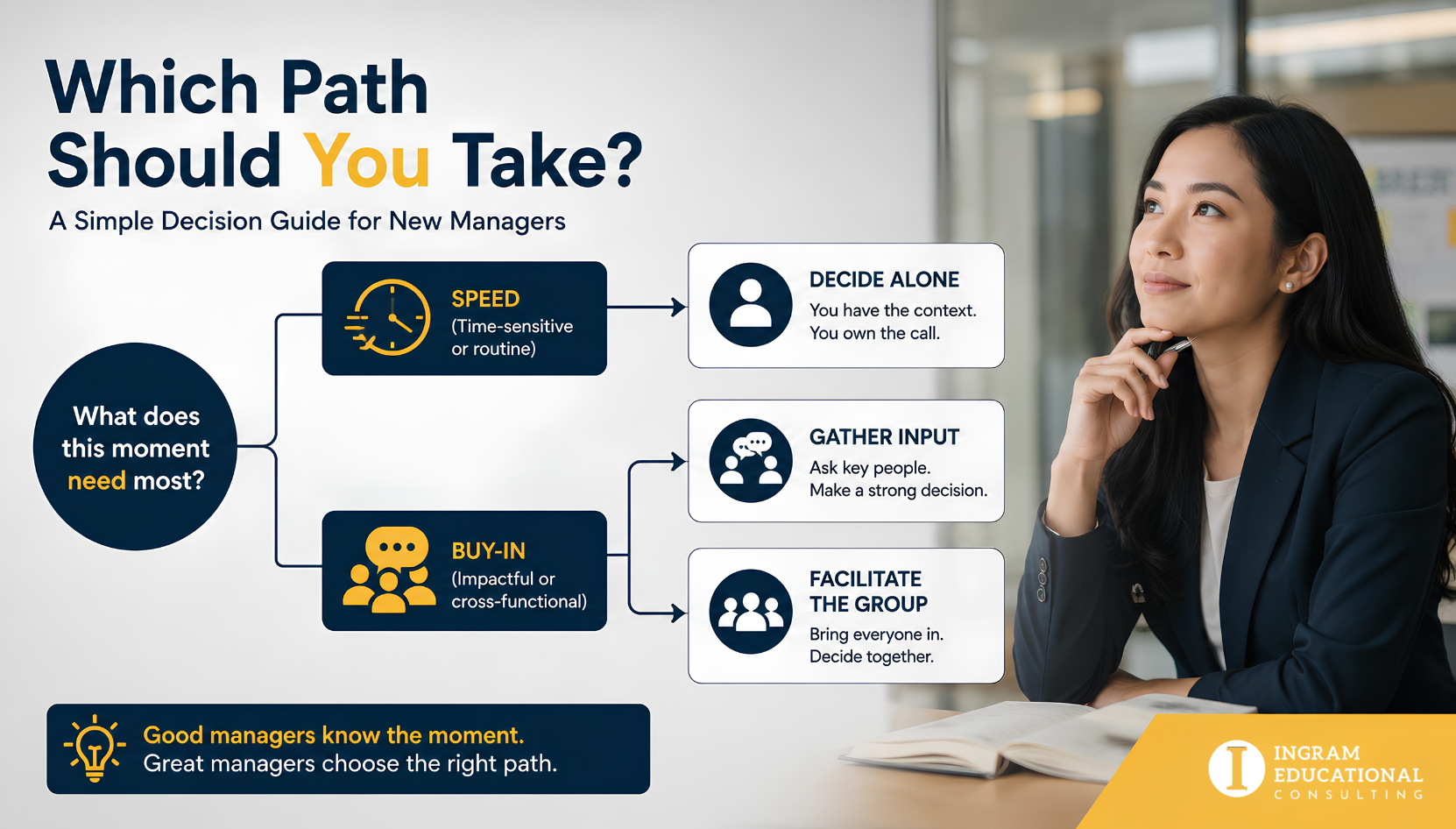
Not every decision deserves a group huddle, and not every decision should be made alone behind a closed door. Part of leading well is reading the situation and choosing your level of involvement on purpose.
Sometimes the call is urgent or highly technical, and your team needs you to decide and keep things moving. Other times the decision only sticks if people feel ownership of it, and rushing it solo guarantees resistance down the line. A steady leader pauses long enough to ask one question: does this need my speed, or does it need their buy-in? The answer tells you whether to decide on your own, gather input first, or hand the group the pen and facilitate toward consensus.
Build a Loop, Not a One-Time Lesson
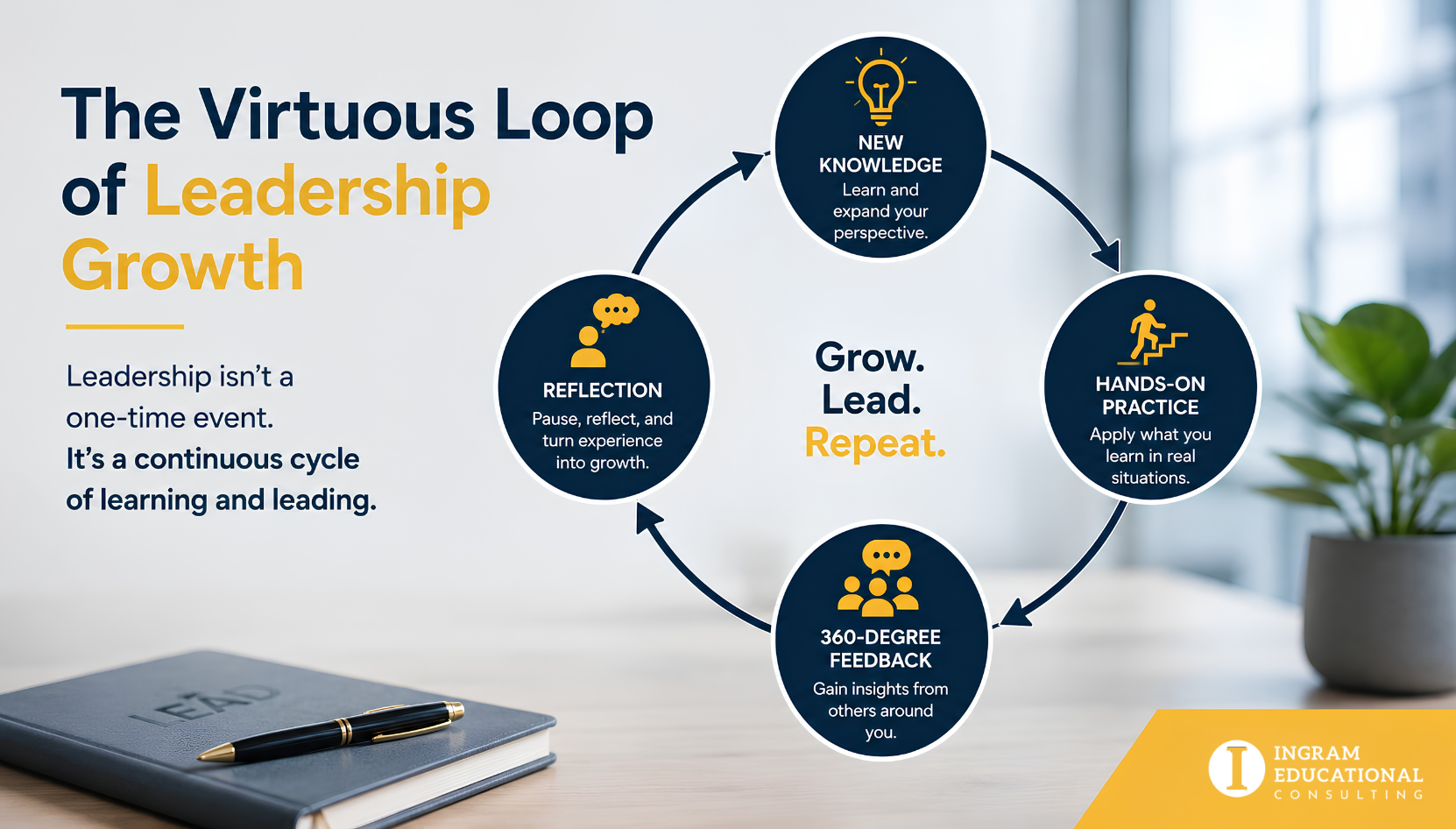
Accountability and good decisions are not personality traits you either have or you don’t. They are skills, and skills grow through repetition.
The strongest teams run a simple learning loop. They pick up a new idea, they put it into practice in real roles, they gather honest feedback (often through 360-degree input from peers, direct reports, and managers), and then they pause to reflect on what the experience taught them. After that, they run the loop again. This is how a team moves from accidental culture to a culture you actually designed on purpose. The pattern matters far more than any single win.
Three Small Bites to Try This Week
You do not need a reorganization to start. You need three small actions.
1. Name one owner. Pick a current project with fuzzy accountability and attach a single name to the outcome. Tell that person plainly, and tell the team.
2. Keep one commitment out loud. Make a promise to your team this week, then deliver on it where everyone can see. Trust compounds from small deposits.
3. Ask before you answer. In your next team problem, hold your solution for sixty seconds and ask, “What more can we find here?” Pay attention to who steps forward.
Final Perspective
Culture is never an accident. It is a system you build on purpose, one clear decision and one kept promise at a time. The tools are not complicated. The discipline to use them, day after day, is the real work of leadership.
You earned the title. Now build the team that makes it mean something.
YOUR NEXT STEP WITH IEC
Lead With Clarity, Not Guesswork
Every strong leader starts in the same place: self-awareness. The DISC assessment from Ingram Educational Consulting shows you how you naturally lead, decide, and communicate, so you can adjust with intention instead of running on instinct alone.
When you are ready to go deeper, our Rise to Lead 12-Week Program walks cohorts of new and mid-level leaders through four stages of growth, all built on the RISE Framework and delivered by a practitioner who leads at the executive level every single day.
Prefer to start with a conversation? Tell us where your team is stuck and we will show you the next small bite.
Book your free 30-minute discovery call: calendly.com/oingram2/30mindiscoverycall
These ideas come from the leadership work of Orville O. Ingram, M.Ed., and his book Leadership in Small Bites: Quick Actions That Transform Any Team.